Why Wellington Needs an Environmental Committee
When Charles Oliver Wellington, a wealthy New York accountant, purchased approximately 18,000 acres in western Palm Beach County in the early 1950s, he acquired wetlands barely distinguishable from the original Everglades. Their transformation into today's Village of Wellington is a remarkable story of engineering, drainage, agriculture, and development. But it is also a chapter in the enormous environmental changes accompanying South Florida's rapid growth.
In 1948, Congress authorized the Central and Southern Florida Flood Control Project, which eventually created approximately 2,200 miles of canals to drain wetlands, control flooding, and supply water for expanding communities and agriculture throughout South Florida.
Added to that project, in 1953, Florida established the Acme Drainage District, later renamed the Acme Improvement District, to oversee the drainage and water management systems in western Palm Beach County that made Wellington's development possible.
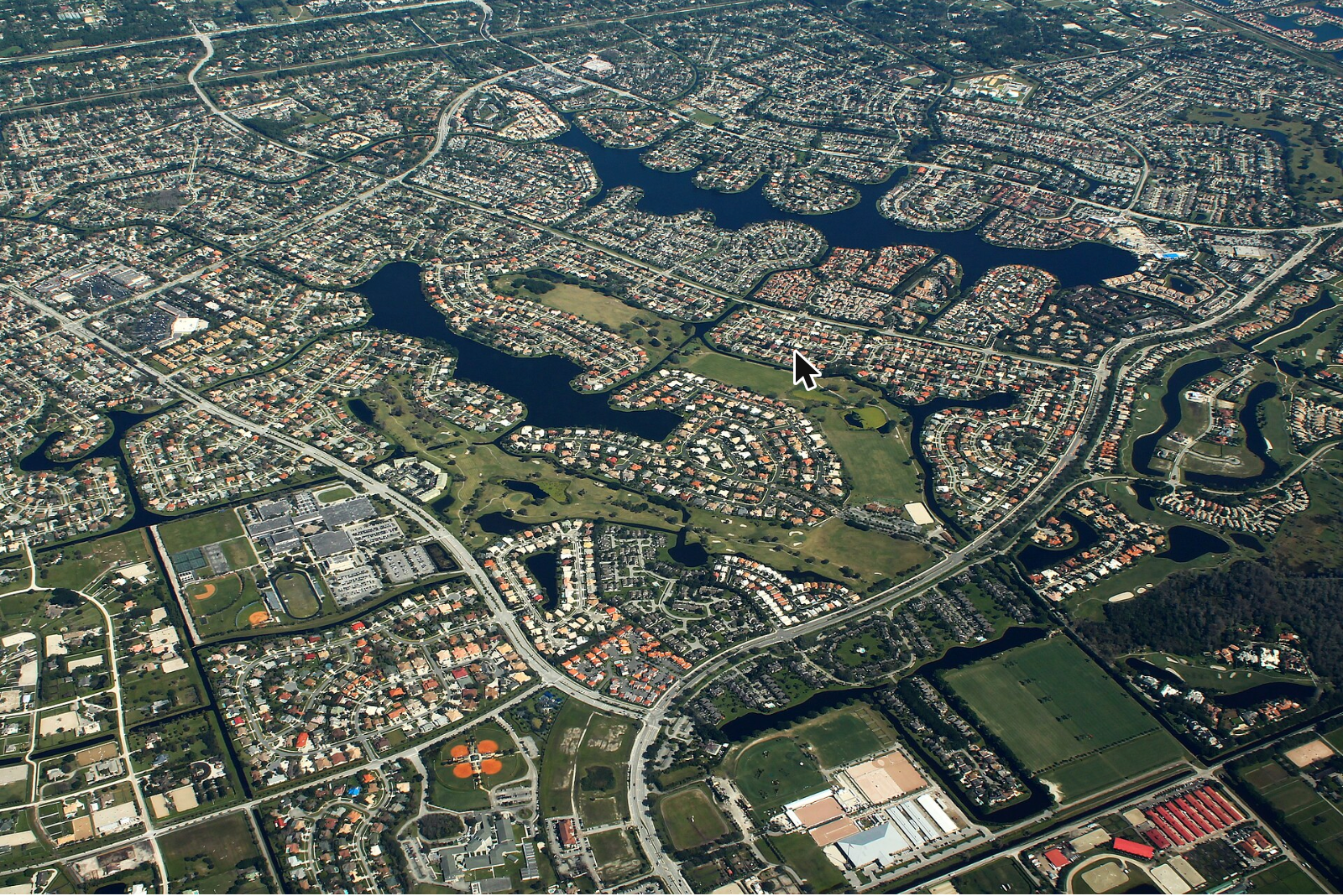
Today, Wellington proudly calls itself the "Winter Equestrian Capital of the World." Its neighborhoods, equestrian properties, parks, and open spaces give the community its distinctive character. But Wellington remains part of the greater Everglades ecosystem, and its environmental importance and responsibilities have never disappeared.
Those responsibilities have become increasingly important as development pressures intensify throughout Palm Beach County and the Greater Everglades.
We believe the time has come for the Wellington Village Council to establish an Environmental Committee, appointed by and reporting directly to the Council, to help guide the community's environmental future.
Wellington faces environmental challenges extending far beyond its equestrian heritage: wetland destruction, wildlife habitat loss, water pollution, stormwater management, invasive exotic vegetation, loss of aquifer recharge areas, traffic congestion, and conversion of open spaces into development.
Consider water quality. Wellington's natural drainage system historically carried phosphorus-laden stormwater south into the Arthur R. Marshall Loxahatchee National Wildlife Refuge, a major remnant of the northern Everglades.
Following passage of Florida's 1994 Everglades Forever Act and the establishment of stricter phosphorus standards, Wellington redesigned its drainage system to eliminate direct discharges into the refuge. Stormwater from the southern drainage basin (Basin B) was redirected northward through pump stations and treatment facilities and ultimately into the C-51 West Canal along Southern Blvd.
The 410-acre, award-winning Wellington Environmental Preserve, a major component of that drainage redesign, demonstrates how environmental protection and responsible water management can work together. Its constructed wetlands remove pollutants from stormwater while providing wildlife habitat and recreational opportunities.
But such accomplishments should be the beginning of an ongoing commitment, not the end of one.
The controversial Wellington South development provides a compelling example of why an Environmental Committee is needed. The approximately 288-acre proposal by Mark Bellissimo, Wellington Equestrian Partners and affiliates included new equestrian showgrounds and luxury residential units on land containing wetlands connected to the northern Everglades ecosystem.
The project also included Peacock Pond, a former wetland and water retention area previously identified in Wellington's planning documents as an area that the Village itself had attempted to acquire through eminent domain. Its proposed redevelopment as part of Wellington South raised questions about wetland protection, environmental permitting, and the consequences of converting environmentally sensitive lands to residential uses.
Other concerns included wetland filling and alteration, changes to natural drainage and stormwater retention, wildlife habitat loss, and groundwater recharge. In 2024, the U.S. Army Corps of Engineers investigated activities in federally regulated wetlands associated with the proposed showgrounds on a parcel known as Pod F. The developer disputed allegations of unauthorized, unpermitted work, and a new federal permit was ultimately issued.
The non-profit South Florida Wildlands Association and others raised numerous environmental objections during the approval process. A Wellington Environmental Committee could have independently and systematically reviewed those concerns, examined less destructive alternatives, and submitted recommendations directly to the Village Council before major land-use decisions were made.
Wellington South is hardly the only development raising environmental concerns. The village's approximately 9,000-acre Equestrian Preserve Area faces continuing development pressure. New buildings, roads, parking lots, and commercial facilities can eliminate open space, increase stormwater runoff, and fragment remaining wildlife habitat.
These interconnected issues require long-term planning and consideration of cumulative environmental impacts.
Wellington already has an Equestrian Preserve Committee advising the Village Council on matters affecting the equestrian community. That committee serves an important purpose. But protecting equestrian land uses is not the same as protecting the natural resources upon which Wellington and the surrounding Everglades depend.
What Wellington needs is a permanent advisory body whose central mission is environmental protection.
Such a committee could bring together residents with expertise in ecology, hydrology, wildlife conservation, environmental science, and land-use planning, along with citizens committed to protecting Wellington's natural environment.
A central responsibility should be formal review of major development applications with potential environmental impacts. The committee should receive applications early in the approval process, have access to environmental studies and supporting documents, and submit written findings and recommendations directly to the Village Council before final votes. Its recommendations should become part of the public record.
Additional responsibilities could include recommending wetland and wildlife protections, evaluating water quality and stormwater policies, encouraging habitat restoration, and identifying opportunities to acquire and preserve environmentally sensitive lands.
The committee would not replace elected officials or professional village staff. Instead, it would provide independent expertise and public participation to strengthen the Council's decision-making.
Water does not recognize municipal boundaries. Decisions about development, drainage, and pollution within Wellington can affect wildlife and wetlands throughout the Greater Everglades.
Establishing an Environmental Committee, appointed by and reporting directly to the Village Council, would help ensure that Wellington's natural heritage remains an essential part of its future.
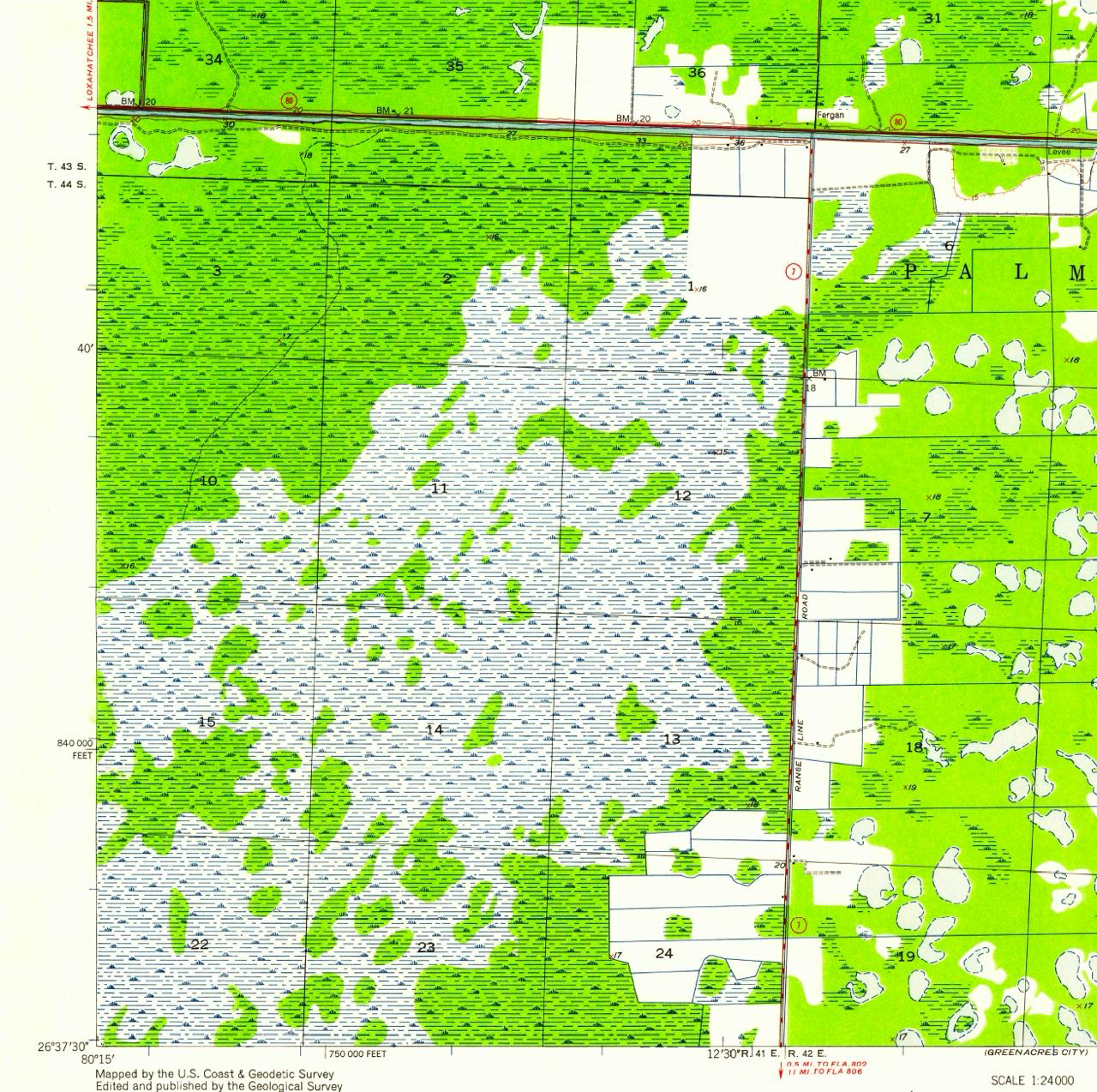
The map accompanying this article is a 1946 USGS topographic survey of the Palm Beach Farms quadrangle, predating the Central and Southern Florida Flood Control Project authorized in 1948. The vast wetland in the lower-left portion of the map is present-day Wellington. The east-west road is now Southern Blvd., and the north-south road, then called Range Line Road, became Forest Hill Blvd. The map also shows the original Loxahatchee Slough, which once flowed from what is now the Loxahatchee National Wildlife Refuge, through Wellington, to the Loxahatchee River in Jupiter.